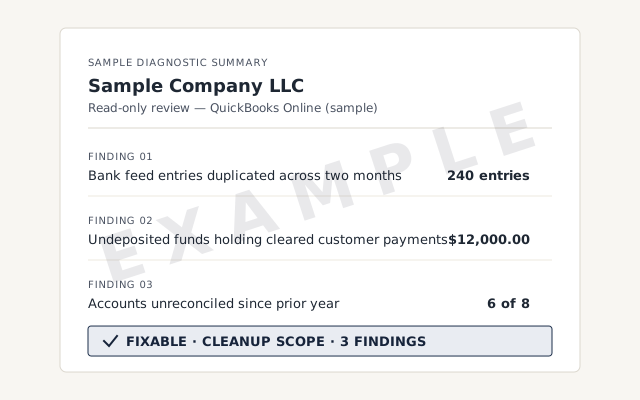
 Sample workflow — not a specific client’s data
A real reconciliation summary
The written read-out showing which transactions the feed doubled, dropped, or never delivered while it was down.
QuickBooks error OL-301 / OL-302
The bank feed stopped connecting? Here's the fix.
A bank feed that suddenly will not connect or update — QuickBooks error OL-301, or its sibling OL-302 — means the online-banking exchange did not complete. The problem lives in the link: a connection setting, a change on the bank's side, or the aggregator that carries the data. Your company file is fine; refreshing or re-linking the connection clears most cases.
Who this affects
You will see OL-301 or OL-302 when QuickBooks tries to talk to your bank and the exchange does not complete. The company file is fine — the transactions already posted are still there, and nothing in the data has been damaged. What failed is the online-banking handshake: a login that needs re-authorizing, an agreement waiting on the bank's website, a security change the bank rolled out, or a hiccup in the aggregator service that shuttles the data. Because the cause sits on the bank or aggregator side, the same error can appear even when nothing changed in your QuickBooks.
Where the error lives
Start here
OL-301 — a connection fix, or a deeper books problem?
A connection fix
Sign in at the bank, then refresh or re-link the account — this clears most OL-301 and OL-302 messages.
Now it is reconciliation
A feed that dropped and resumed can leave duplicates or gaps the books must be reconciled to.
See bank-feed issuesFix it yourself
Most OL-301 and OL-302 cases clear once the bank-side blockers are gone and the connection is refreshed or rebuilt — so work from the bank inward, in this order.
Log in to your bank's own website and clear anything waiting — a new alert, a security prompt, a terms agreement, or a login change. An unread bank-side notice is one of the most common reasons a feed stops connecting.
Back in QuickBooks, refresh the account or run Update on the bank feed. A single re-authorization after the bank-side alert is cleared often brings OL-301 straight back to a working connection.
If it still fails, turn off online banking for that account, then set it up again from scratch and re-link it to the bank. Rebuilding the connection resolves cases where the old link is stale or broken.
While the feed is down, download a Web Connect (.QBO) file from your bank's website and import it into QuickBooks so posting continues. This keeps you current without waiting on the connection.
When the connection is back, reconcile the account against the real bank statement. A feed that lapsed can overlap or skip dates, so confirm every transaction is present once and only once.
When it is more than the feed
QuickBooks error OL-301 is not itself a books problem — but the outage it causes can become one. When a feed stops and later resumes, it can pull the same days twice or skip the days it was down, so the register quietly drifts out of step with the bank. If you have had OL-301 or OL-302 for a while, the risk is not the error message; it is the duplicate and missing transactions hiding behind it. That is reconciliation and cleanup work: matching the register back to the bank statement, clearing the doubles, and adding what never came through, so the balance you report is the balance you actually have. Two neighbors are worth knowing: if the failure hits while you are connecting or reconnecting the account rather than during a download, that is usually error OLSU-1013, and if QuickBooks closes outright instead of returning a bank-feed code, start with the unrecoverable error guide.
What an outage leaves behind
Sample workflow — not a specific client’s data
The written read-out showing which transactions the feed doubled, dropped, or never delivered while it was down.
We reconcile the account to the real statement before we call it clean. See what cleanup involves.
See QuickBooks cleanupA written reply within one business day.
OL-301, and its close relative OL-302, means QuickBooks could not complete an online-banking connection to your bank. The trouble is in the link between the bank and QuickBooks — a connection setting, a bank-side change, or the aggregator that moves the data — not in your company file. Your books are intact; the feed simply did not come through.
Sign in to your bank's website first to clear any alert or agreement waiting there, then in QuickBooks refresh the account or update the bank feed. If it still fails, deactivate online banking for that account and reconnect it fresh. That refresh-or-relink sequence resolves most OL-301 and OL-302 messages.
No. OL-301 is a banking-connection error, not a file-integrity error. It does not point to corruption the way file-open errors do. If a bank feed is down, the fix is on the connection or the bank side — not a file repair — though the missed transactions still need to be reconciled once the feed returns.
Banks change how they publish data, update their security or login flow, or require a new agreement, and any of those can break an existing connection until you re-authorize it. Because the cause sits on the bank or aggregator side, the error can appear even though nothing changed in your QuickBooks.
Yes. While the feed is down you can download a Web Connect (.QBO) file from your bank's website and import it into QuickBooks manually, so posting continues. Watch for duplicates where the feed later resumes over the same dates — a downtime like this is exactly when a bank feed can hide double or missing entries that reconciliation has to catch.
Timing. OLSU-1013 appears while you are setting up or activating a bank feed — the connection never gets established. OL-301 appears after the account is connected, when a download or refresh fails. If your feed used to work and stopped, you are in OL-301 territory; if it never connected at all, start with OLSU-1013.