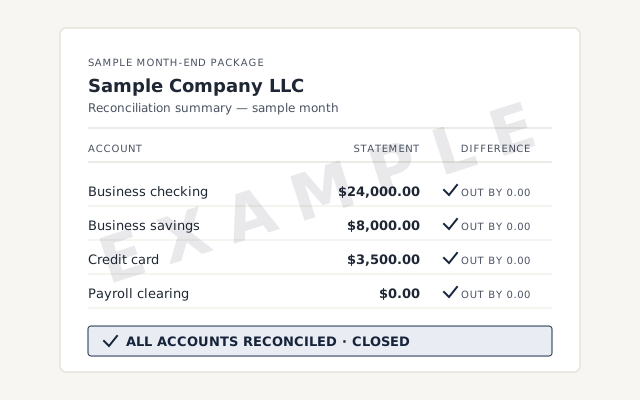
 Sample workflow — not a specific client’s data
A written, honest read
The plain-language finding of whether your file is a DIY fix or a real cleanup, yours to keep either way.
DIY vs. professional cleanup
It comes down to how tangled the file is. A recent, isolated mess you can explain — a few miscategorized transactions, one month that won't reconcile — is genuinely a do-it-yourself job, and paying someone for it would be wasteful. Months of compounded drift, changed prior-period records, and balances nobody trusts are where a professional earns the fee.
Whether to clean up QuickBooks yourself or hire a professional comes down to one question: how tangled is the file? A recent, isolated mess you can explain — a few transactions in the wrong account, one month that won't reconcile by an amount you can see — is a job a careful owner can finish, and paying someone for it would be wasteful. It's months of compounded drift, changed records, and balances nobody trusts anymore where a professional earns the fee.
We say that plainly because we would rather you not hire us for work you can do in an evening. The line isn't how big your business is or how nervous the books make you — it's whether the damage is contained enough that a careful owner can trace it, or whether it has spread across periods and accounts in a way that has to be reconstructed in order rather than patched at the end.
Do it yourself when the mess is recent, isolated, and something you can point to. If your books reconciled cleanly a few months ago and drifted since, if the problem is a handful of transactions in the wrong account, or if one recent month won't reconcile by an amount you can see, you have the kind of cleanup an owner can finish over a weekend.
You need two things beyond a contained mess: a little comfort with how QuickBooks records transactions, and the time to work carefully. If you have both, our free guide to cleaning up QuickBooks walks the same order we use — reconcile from the last clean month forward, fix categorizations, and prove each period ties — so you can do it without paying anyone. There's no trick we keep back for paying clients.
Hire a professional when the drift has compounded: several accounts, several months, prior periods edited after they were supposedly closed, and a beginning balance no one can vouch for. That's not a weekend job, and unwinding it by hand usually makes things worse before they get better.
The tell is whether you can say when the file last reconciled cleanly. If you can, you have a starting point and a contained problem. If you can't — the reconcile window opens to a difference nobody can explain, and the history has been changed in ways you can't reconstruct — the file has to be rebuilt period by period, and that's what a professional cleanup is for. The value isn't effort; it's knowing which thread to pull so the rest doesn't unravel.
The line, drawn
Side by side
Read the table by your own file. Where doing it yourself genuinely wins — cost, and the simple, recent fixes — it says so; the professional column earns its place only where the mess has a history that has to be reconstructed rather than patched.
| Do it yourself | Professional cleanup | |
|---|---|---|
| Best when | A recent, isolated mess you understand | Months of compounded drift |
| What it costs | Your own time | A fixed scope, quoted after a free review |
| Fix obvious miscategorizations | ||
| Reconcile a single recent month | ||
| Reconstruct months of drift in order | It depends | |
| Safely unwind changed prior periods | It depends | |
| A documented change log a CPA can audit | — | |
| A second pair of eyes to verify it ties | — | |
| Typical effort | An evening to a weekend | Days, fixed scope |
| Verdict | Recent and understood | Compounded and tangled |
Beyond the labor, a professional adds two things a DIY cleanup rarely produces: reconciliation you can prove, and a documented change log. We work backward from the last period that reconciled cleanly, re-tie each month to its statement, and hand back a written record of every entry we touched and why.
That verification is the real product. Anyone can move a transaction; the discipline is proving the file ties to the bank and to your returns afterward, so the numbers hold up when a lender, a buyer, or a tax preparer leans on them. Our methodology lays out exactly how we reconcile and document, because the point of hiring a specialist is to end up with books you can trust — and be able to show why.
What the fee actually buys
Our commitment
Straight talk
We're a bookkeeping firm, not a sales funnel, so our recommendation is sometimes “do it yourself.” A free QuickBooks review is a view-only look at your file that tells you honestly which side of the line you're on — a weekend fix or a real cleanup — and every finding is yours to keep whether or not you hire us.
If the review shows a contained, recent mess, we'll say so and point you at the guide rather than quote a scope. If it shows compounded drift, we'll show you exactly what's tangled and what it takes to straighten it. Either way you leave knowing what you're dealing with, which is more than a scare-sell would ever give you. Still weighing your options? Our comparison hub lays out the other routes side by side.
You don't have to take our word for it. Here's what you can check — an honest read of your file you own, the method we use to prove a cleanup ties, and our response commitment.
Sample workflow — not a specific client’s data
The plain-language finding of whether your file is a DIY fix or a real cleanup, yours to keep either way.
How we reconcile and document a cleanup so it ties to the bank and your returns. Read exactly how.
Read the full methodA written reply within one business day.
Remote-first, nationwide
Mon–Sat · 8am–6pm CT
We work entirely remote — view-only access to your file for the free review, screen-share whenever you want to watch, and every finding documented in writing.
Often, yes. When the mess is recent and contained — a handful of miscategorized transactions, one month that won't reconcile by an amount you can see — a careful owner can fix it over a weekend without hiring anyone. It's compounded drift across many months and accounts that genuinely needs a specialist, not the size of your business or how nervous the books make you.
The clearest test is whether you can say when the file last reconciled cleanly. If you can, you have a starting point and a contained problem you can work forward from. If you can't — the reconcile window opens to a difference nobody can explain and prior periods were edited after they were closed — the history has to be reconstructed in order, and that's past a DIY fix.
Usually not, and we'll tell you so. Paying for a scoped engagement to fix a few recent transactions you could correct yourself is wasteful, and there's no prize for it. A professional earns the fee when the drift has a history — many months, several accounts, or a beginning balance nobody trusts — where doing it by hand tends to make things worse before they get better.
Two things a DIY cleanup rarely produces: reconciliation you can prove, and a documented change log. The skill isn't moving a transaction — anyone can do that — it's knowing which thread to pull so the rest doesn't unravel, re-tying each period to its statement, and handing back a written record a CPA can audit. The product is books you can trust and show why.
No. It's a view-only look at your file that tells you honestly which side of the line you're on — a weekend fix or a real cleanup — and every finding is yours to keep whether or not you hire us. When the honest answer is 'you can do this yourself,' we say so and point you at the guide instead of quoting a scope.
Weighing your options? Compare the routes on our comparison hub, or if the file is genuinely tangled, see what a full QuickBooks cleanup involves.