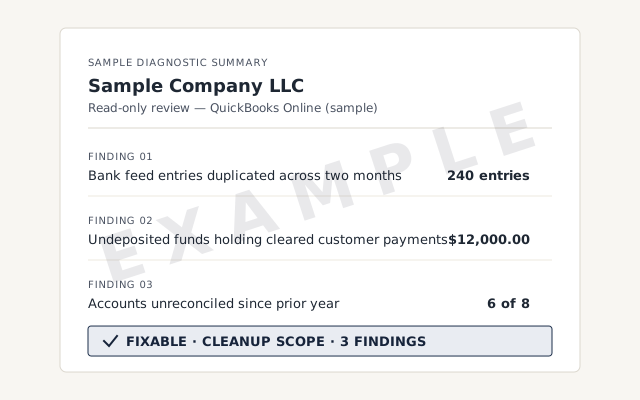
 Sample workflow — not a specific client’s data
A real deposit-grouping summary
The before-and-after you receive once the holding account is cleared and every deposit ties to the bank.
QuickBooks undeposited funds fix
Stuck balance? Here's how it clears.
The QuickBooks undeposited funds fix is grouping each recorded customer payment into the bank deposit that actually hit your statement. A stuck balance means that deposit step never happened, so the books show cash the bank can't confirm — small, recent balances you can clear yourself; months of tangled entries need cleanup.
Which do you need?
Start here
How stuck is your Undeposited Funds balance?
Fix it yourself
A handful of recent payments group into their real deposits in an afternoon — no specialist needed.
Read the undeposited funds guideCleanup
When payments and deposits no longer line up across months, the balance has to be untangled entry by entry.
See QuickBooks cleanupCleanup + reconciliation
If the account also breaks reconciliation, the deposits and statements have to be tied back together.
See bank reconciliationHonest answer
Not every Undeposited Funds balance is a problem. If you use QuickBooks the way it's designed — recording each customer payment, then grouping payments into a deposit that matches what your bank received — the account is supposed to hold a balance briefly between those two steps. A balance at month-end only matters when it never clears, or when it's made of payments that were deposited long ago.
The businesses that get stuck here tend to record payments and deposits in two disconnected habits: they mark invoices paid inside QuickBooks, then separately accept a lump-sum deposit from the bank feed. The customer payments pile up in Undeposited Funds while the feed deposits post straight to checking, so the same money is counted twice and the holding account never drains. If that sounds like your file, the size of the tangle — not the account itself — decides whether this is a quick fix or a cleanup.
Do-it-yourself
If your Undeposited Funds balance is small and recent — a few payments from this month or last — this is a do-it-yourself fix, and you don't need us for it. Open Undeposited Funds, find the payments that make up each real bank deposit, and use Record Deposits (Bank Deposit in QuickBooks Online) to group them into a single deposit that matches the statement line. When the grouped total equals what the bank actually received, that deposit clears out of the holding account.
The grouping fix
Work one deposit at a time and check each grouped total against the bank before you save. The undeposited funds reference walks through the grouping step by step. Where it stops being a do-it-yourself job is when the balance spans months, the same payments were also entered from the bank feed, or you can no longer tell which payments belong to which deposit — that's duplication to unwind, and it's what cleanup is for.
Sample workflow — not a specific client’s data
The before-and-after you receive once the holding account is cleared and every deposit ties to the bank.
Every grouped deposit tied back to the statement line it clears. Read the method.
Read the undeposited funds referenceA written reply within one business day.
Remote-first, nationwide
Mon–Sat · 8am–6pm CT
We work entirely remote — view-only access for the free review, QuickBooks' accountant access if you hire us to untangle it, screen-share whenever you want to watch, and every deposit documented in writing.
It's a temporary holding account. When you receive a customer payment, QuickBooks parks it in Undeposited Funds until you record the bank deposit that groups those payments together — so the deposit in your books matches the one on your statement.
Usually because the deposit step never happened. Payments were marked received but never grouped into a Record Deposits (Bank Deposit) entry, so they sit in the holding account while the actual money shows up elsewhere, often from the bank feed.
No — deleting it or zeroing it with a journal entry hides the problem and usually breaks reconciliation. Each payment has to be grouped into the real deposit it belongs to, or removed as a genuine duplicate. That's bookkeeping, not a one-click fix.
A data problem, not a bug. Undeposited Funds works as designed; the balance builds up from how payments and deposits were recorded. That's why the fix is in the entries, and why a tangled one is a cleanup rather than a software repair.
Your real bank balance doesn't change — the statement is the statement. What changes is the QuickBooks cash figure, which stops double-counting deposits once the holding account clears. Reports and reconciliation line up with the bank again.
Record deposits the way the bank receives them. When a lump-sum deposit arrives in the bank feed, match it to the customer payments already waiting in Undeposited Funds instead of adding it as new income. That one habit — group payments, then match the feed — keeps the account draining to zero.