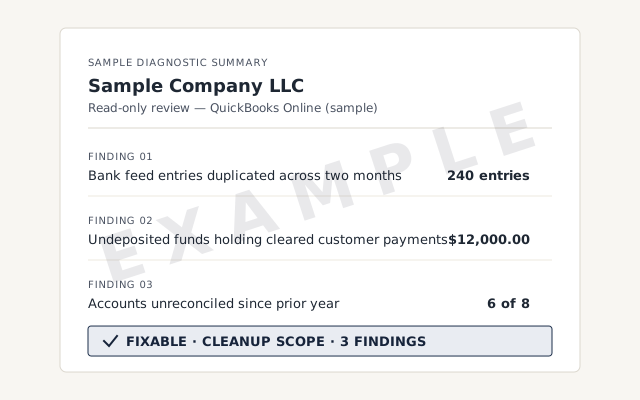
 Sample workflow — not a specific client’s data
A real diagnostic summary
The written read-out that tells you whether it is permissions or genuine file damage.
Error -6000, -77
Blocked from a file on a network drive? Here's how it clears.
QuickBooks error -6000, -77 means the program can reach your company file's location but is blocked from using it — usually because the file sits on an external drive, a mapped network drive, or a folder without the right permissions. Moving the file to a local drive and correcting folder access clears most cases. Occasionally it signals real damage.
Who this affects
You will usually see -6000, -77 when the company file is stored somewhere QuickBooks struggles to reach with full rights — an external USB drive, a mapped network drive, or a shared folder locked down by Windows permissions. The data is generally fine; QuickBooks just is not allowed to open the file where it sits. Move it somewhere it has proper access, and the error typically disappears.
Start here
-6000, -77 — a permission fix, or a damaged file?
A permissions fix
Move the file local, or correct hosting and folder rights — this clears most -6000, -77 messages.
Now suspect damage
If the file will not open even locally with full permissions, the file itself may be damaged.
See file repairFix it yourself
The fastest test is to move the file local. If it opens there, you have confirmed the cause is where the file was stored, not the file itself.
Copy the .QBW company file from the external or network drive to the local C: drive, then open it from there. If it opens, the location was the problem.
On the folder that holds the file, give the Windows user running QuickBooks full read and write permissions. Restricted folder rights are a common -6000, -77 cause.
If the file is shared, only the server hosts it. Confirm hosting is on at the server and off on every workstation, so one machine controls access.
On the host, scan the folder holding the file with QuickBooks Database Server Manager so it is served with the right permissions.
Open the company file again from its proper location. If access is set correctly, -6000, -77 clears and the file opens.
The permission fix, in order
When to call us
If the file still throws -6000, -77 after you have moved it to a local drive and granted full folder permissions, location is not the cause. A file that will not open even locally, with correct rights, is showing signs of damage. That is a file repair, and if data is already missing, a rescue. We diagnose on a copy, so your original file is never put at further risk — and where a Desktop repair needs admin-level access to the file, it runs over a screen-share or a hosted copy you control. Two near neighbors are worth knowing: error -6000, -83 is the same family's general open failure, with hosting and the .ND/.TLG helpers in the mix, and error H202 is the multi-user cousin where workstations cannot reach the host at all.
What the local test tells you
When it is not QuickBooks
Some -6000, -77 cases are Windows problems wearing a QuickBooks error number. If the block traces to server folder rights, domain or group policies, or a network drive that will not grant full access, the fix sits at the operating-system level — and that work belongs with your IT support, not a bookkeeping firm. We will say plainly which side of that line your case sits on. For Intuit's own documentation on the -6000 series and the Tool Hub, see QuickBooks official help.
Sample workflow — not a specific client’s data
The written read-out that tells you whether it is permissions or genuine file damage.
We confirm the cause on a copy before changing your file. See what repair involves.
See QuickBooks file repairA written reply within one business day.
It means QuickBooks located your company file but was denied permission to open it. Almost always the file is on an external drive, a mapped network drive, or a folder without full access rights. QuickBooks can see the file; Windows just will not let it open the file where it sits.
Copy the company file to your local C: drive and open it there. If it opens, the storage location was the problem. Then set full folder permissions and correct hosting before moving it back to a share. That local test resolves or diagnoses most -6000, -77 cases in minutes.
Mapped network drives and external drives often do not give QuickBooks the continuous, full-permission access it needs to open a company file directly. The recommended setup is to host the file on one computer and share it through the Database Server Manager, rather than opening it off a drive.
Sometimes. If the file still fails after you move it to a local drive and grant full permissions, the location has been ruled out and damage is the likely cause. At that point it is a file repair, or a rescue if data is already missing — not another permissions change.
Yes. Copying the .QBW file to a local drive to test is safe and reversible — you are not altering the data, just where it opens from. Keep a backup first as a habit. If moving it local fixes the error, you have confirmed the problem was access, not the file.
No, but it can save time. QuickBooks File Doctor, inside Intuit's free Tool Hub, automates the same network and permission checks the manual steps cover. Run it on the computer that stores the file. If -6000, -77 survives File Doctor and the local-drive test, stop — the file itself needs looking at.